


30 October, 2026
What Is Critical Thinking? 7 Effective Ways to Develop Critical Thinking Skills in Children

Critical thinking is the ability to analyse and evaluate information objectively and logically before reaching a conclusion. For children, it is not simply an instinctive ability. It is a skill that can be developed through open-ended questions, respectful discussion and opportunities to solve real-world problems. Explore practical ways to help children strengthen their critical thinking skills with British Vietnamese International School (BVIS) Ho Chi Minh City.
TABLE OF CONTENTS
- What Is Critical Thinking?
- What Are the Characteristics of a Critical Thinker?
- Why Do Children Need Critical Thinking Skills?
- 7 Ways to Develop Critical Thinking Skills in Everyday Life
- 1. Encourage Children to Ask “Why?”
- 2. Use Open-Ended Questions in Everyday Conversations
- 3. Encourage Children to Evaluate Information from Different Sources
- 4. Give Children Opportunities to Make Decisions
- 5. Encourage Respectful Debate and Discussion
- 6. Encourage Children to Solve Real-World Problems
- 7. Learn Through Projects and Real-World Experiences
- How Does BVIS Ho Chi Minh City Encourage Critical Thinking?
What Is Critical Thinking?
Critical thinking is the ability to analyse and evaluate information and form judgements based on logical reasoning, evidence and careful consideration. Rather than accepting information as fact, a critical thinker asks questions such as “Why?”, “How?” and “What evidence supports this claim?” to understand an issue before reaching a conclusion.
Critical thinking does not mean constantly disagreeing with others or looking for faults in every argument. More importantly, it enables people to consider an issue from different perspectives, assess whether an opinion is well founded and revise their views when new evidence becomes available.
For children, critical thinking develops through asking questions, exploring ideas and learning to explain what happens around them. Over time, children learn to distinguish facts from opinions, recognise incomplete information and form evidence-based judgements instead of simply following instructions or accepting claims passively.
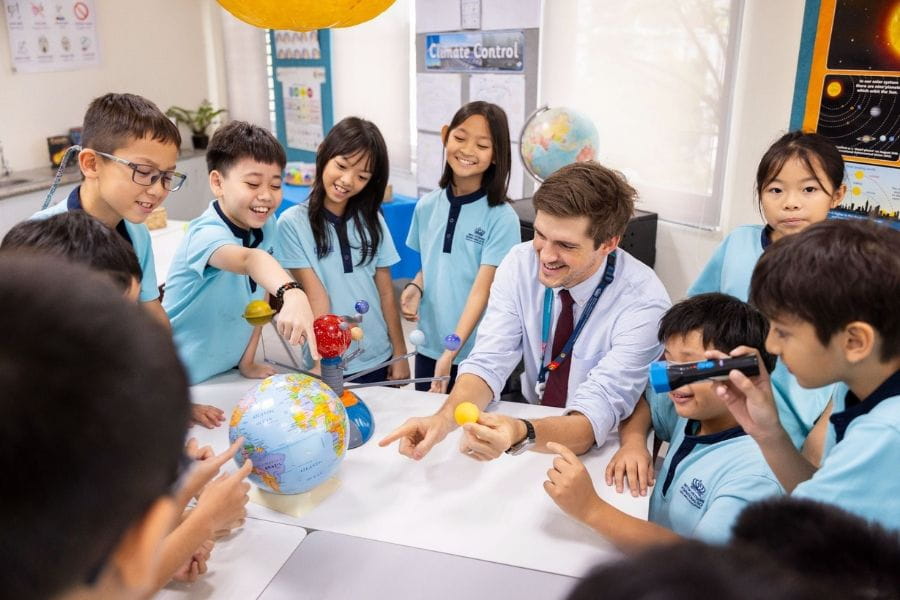
Students develop critical thinking by asking questions, analysing information and actively exploring new ideas (Source: BVIS Ho Chi Minh City)
>> Read more:
- What Is Personalised Learning? Benefits of a Personalised Approach to Education
- What Is STEAM Education? Benefits of Applying the STEAM Approach to Learning
What Are the Characteristics of a Critical Thinker?
A critical thinker is not simply someone who frequently debates or challenges other people’s opinions. Critical thinkers analyse information, assess evidence and make decisions based on logical reasoning. Common characteristics include:
- Asking thoughtful questions: Seeking to understand causes and underlying issues through questions such as “Why?” and “Does this make sense?”
- Analysing information objectively: Distinguishing facts from opinions and assumptions and evaluating an issue on the basis of evidence.
- Considering different perspectives: Listening to contrasting viewpoints and considering alternative explanations before forming an opinion.
- Using logical, evidence-based reasoning: Connecting information, identifying inconsistencies and explaining a viewpoint clearly.
- Being willing to revise a view: Changing an initial opinion when stronger information or more convincing evidence becomes available.
- Solving problems and making effective decisions: Weighing options, anticipating consequences and selecting an approach that suits the situation.
These qualities develop gradually through regular practice. As students strengthen their critical thinking skills, they become better able to learn effectively, evaluate information, solve problems and make independent decisions. This is why more parents are choosing to nurture critical thinking from an early age.
>> Read more: Peer pressure: Causes and consequences for children's health and mental well-being.
Why Do Children Need Critical Thinking Skills?
As children grow, they continually encounter new knowledge, social situations and choices. Critical thinking helps them participate actively in these experiences rather than relying entirely on other people’s answers or decisions. In particular, it supports:
- Developing independent thinking: Critical thinking encourages children to ask questions, seek answers independently and form their own views based on sound reasoning rather than relying entirely on other people’s opinions.
- Improving learning outcomes: By analysing information and making connections between ideas, children can develop a deeper understanding, identify inconsistencies and apply what they have learnt to real-life situations.
- Evaluating information accurately: With regular practice, children become better able to verify sources, distinguish facts from personal opinions and identify misinformation, particularly when using the internet and social media.
- Strengthening problem-solving skills: Considering different options enables children to anticipate possible outcomes and select appropriate solutions based on evidence and logical reasoning.
- Enhancing communication and collaboration: Examining issues from different perspectives helps children explain their views clearly, listen respectfully to differing opinions and work more effectively with others.
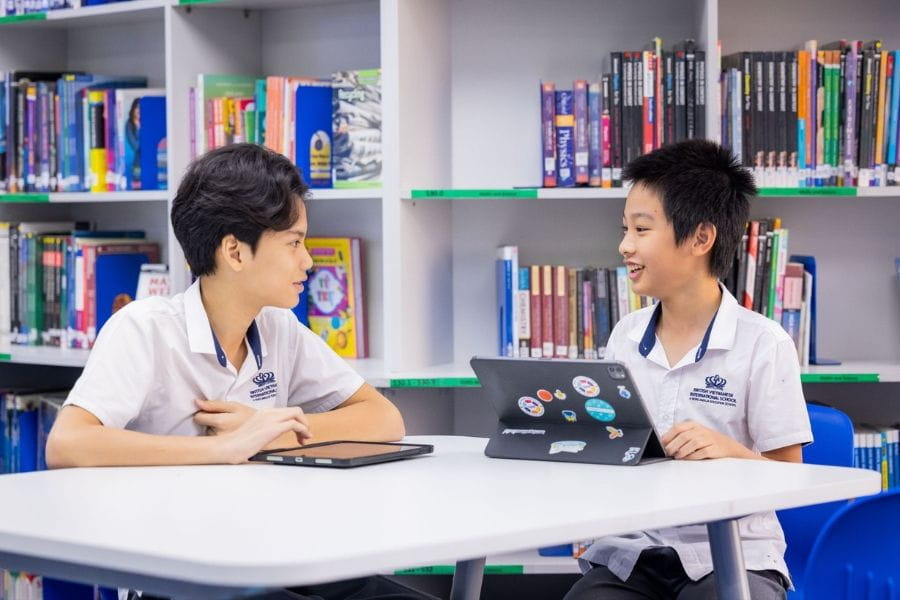
Critical thinking helps children take an active role in their learning and make decisions with confidence in everyday life (Source: BVIS Ho Chi Minh City).
>> Explore more:
- Top 5 Essential Life Skills for Children to Build Confidence and Independence
- Soft Skills: 8 Essential Soft Skills and Their Importance for Students
7 Ways to Develop Critical Thinking Skills in Everyday Life
Critical thinking is developed not only through classroom lessons but also through familiar everyday activities and experiences. Parents can use the following seven strategies to strengthen children’s critical thinking skills.
1. Encourage Children to Ask “Why?”
Children are naturally curious about the world and frequently ask questions about unfamiliar ideas. Rather than providing an immediate answer, parents can encourage them to think, suggest explanations and form their own hypotheses. For example, if a child asks why the sky is blue, the family can explore the answer together through a science book or a simple experiment.
>> See also: 14 Free E-Book Sources for boosting your child’s reading
2. Use Open-Ended Questions in Everyday Conversations
Open-ended questions encourage children to think more deeply, express a viewpoint and consider different explanations instead of answering only “yes” or “no”. Parents might ask, “What do you think about this?”, “What led you to that conclusion?” or “What might happen if one factor changed?” These prompts help children develop reasoning, connect information and examine an issue from several perspectives.
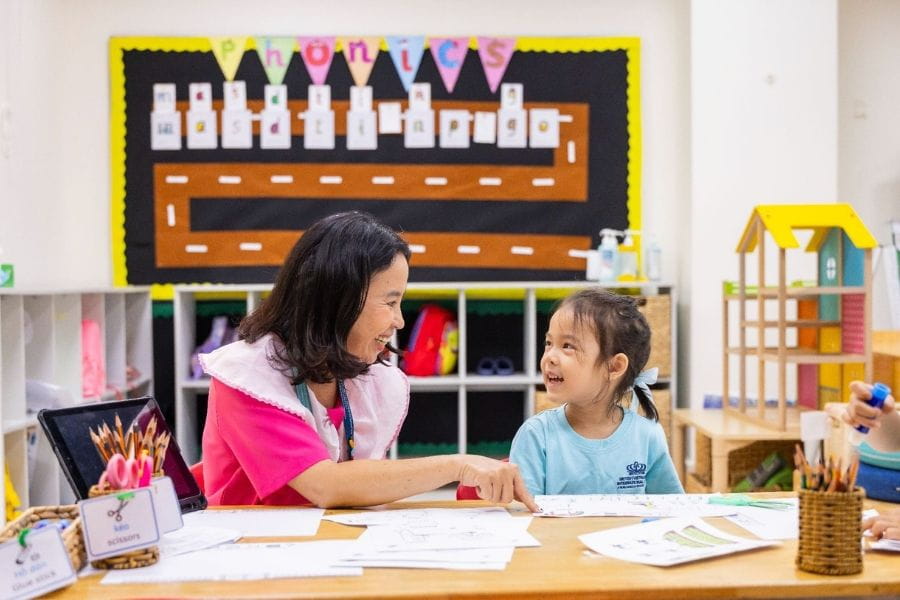
The teacher encourages students to share their thinking, explain their viewpoints and develop critical thinking through open-ended questions (Source: BVIS)
>> Read more: What are communication skills? 7 Effective Ways to Improve Children's Communication Skills
3. Encourage Children to Evaluate Information from Different Sources
In an online environment, children can access a vast amount of information, but not every source is accurate or reliable. Parents can teach children to check where information comes from, identify supporting evidence and compare several sources before believing or sharing a claim. For example, after reading an interesting statement online, a child might verify it in a book, on a trusted educational website or by discussing it with a teacher.
>> Learn more:
- 4 steps to help keep your child safe online
- AI in education: Practical applications of AI in teaching and learning
4. Give Children Opportunities to Make Decisions
Making decisions helps children learn to weigh choices, anticipate outcomes and take responsibility for what they decide. Parents can begin with age-appropriate choices, such as selecting a book, organising study time or planning a weekend activity. When difficulties arise, open-ended questions can help children analyse the advantages and limitations of each option rather than having an adult decide for them.
5. Encourage Respectful Debate and Discussion
Constructive debate gives children opportunities to present a viewpoint, support it with reasons and remain open to different perspectives. Families can discuss familiar topics such as the benefits of reading, appropriate screen time or environmental protection. During these conversations, children should be encouraged to explain their reasoning, provide evidence and listen carefully to opposing views.
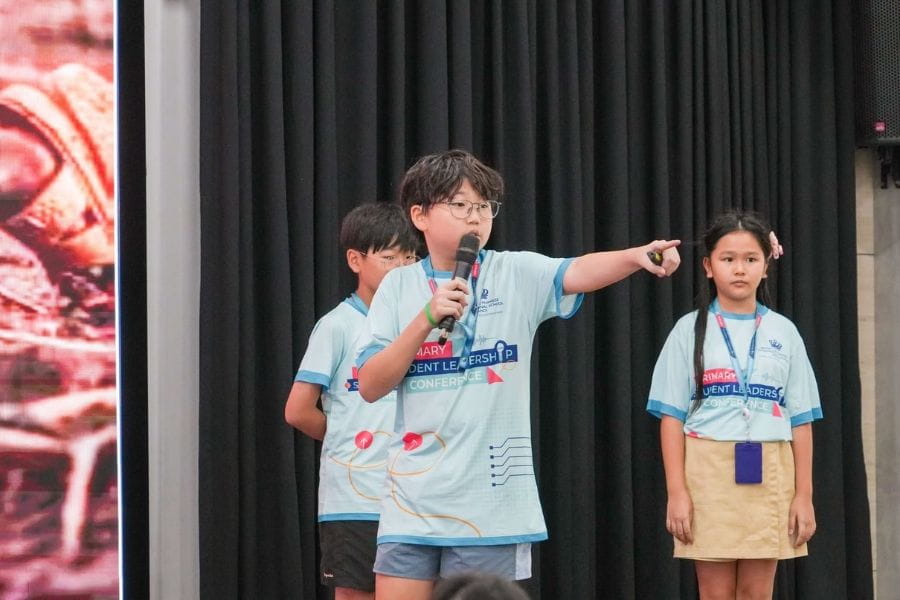
Students confidently share their viewpoints, present reasoned arguments and listen to different perspectives during school discussions (Source: BVIS Ho Chi Minh City)
>> Discover more: How to Develop Reading Habits in Children: 8 Practical Tips
6. Encourage Children to Solve Real-World Problems
Everyday situations allow children to apply critical thinking by identifying causes, analysing a problem and finding suitable solutions. When a child struggles to organise homework, misplaces an item or disagrees with a friend, parents can guide the child to define the issue, consider possible causes and weigh different responses. Afterwards, the family can review the outcome together and identify what could be learned from the experience.
>> Read more: What Are Life Skills? The Role of Life Skills Education in Child Development
7. Learn Through Projects and Real-World Experiences
Projects and experiential learning give children opportunities to investigate independently, form hypotheses, collect information and test results. Families and schools can encourage small projects such as growing a plant, building a scientific model, planning a family trip or exploring ways to reduce household plastic waste. Children identify objectives, select methods, respond to difficulties and evaluate outcomes using evidence. Knowledge therefore becomes more than theory: it becomes a meaningful experience through which critical thinking develops naturally and sustainably.
>> Explore more:
- 6 unbelievable benefits when young children play with water
- Five Benefits of Residential Trips and Field Trip for BVIS HCMC Students
How Does BVIS Ho Chi Minh City Encourage Critical Thinking?
At British Vietnamese International School (BVIS) Ho Chi Minh City, critical thinking is encouraged throughout the learning journey, from Early Years to Secondary. Through age-appropriate learning and experiences, students actively ask questions, analyse information, explore different perspectives and apply knowledge in practical contexts. In doing so, they gradually develop independent thinking, stronger problem-solving skills and greater confidence when making decisions.
A Coherent Academic Pathway from Early Years to A Level
BVIS Ho Chi Minh City provides a coherent academic pathway from the British Early Years Foundation Stage (EYFS) and the International Primary Curriculum (IPC) through to IGCSE and A Level in Secondary. Each phase is designed around students’ age and abilities while progressively developing their capacity to question, research, analyse and apply knowledge in practice.
In Early Years and Primary, students explore the world through interdisciplinary themes and first-hand experiences. In Secondary, they deepen subject knowledge, evaluate evidence, construct logical arguments and address increasingly complex academic challenges. This consistent progression ensures that critical thinking is nurtured continuously, enabling students to form judgements and make decisions with growing confidence, supported by reasoning and evidence.
>> Learn more:
- IB vs A-Levels: What's the difference? Which is better for your child?
- What is the SAT? Key things you need to know about the SAT exam
“Teaching Students How to Think, Not What to Think”
BVIS Ho Chi Minh City encourages research-informed habits of mind, including questioning, reflecting, evaluating information and making well-founded decisions. Instead of receiving knowledge passively, students actively investigate ideas, consider different perspectives and construct their own arguments. This approach develops independent thinking, adaptability and confidence when approaching unfamiliar challenges.
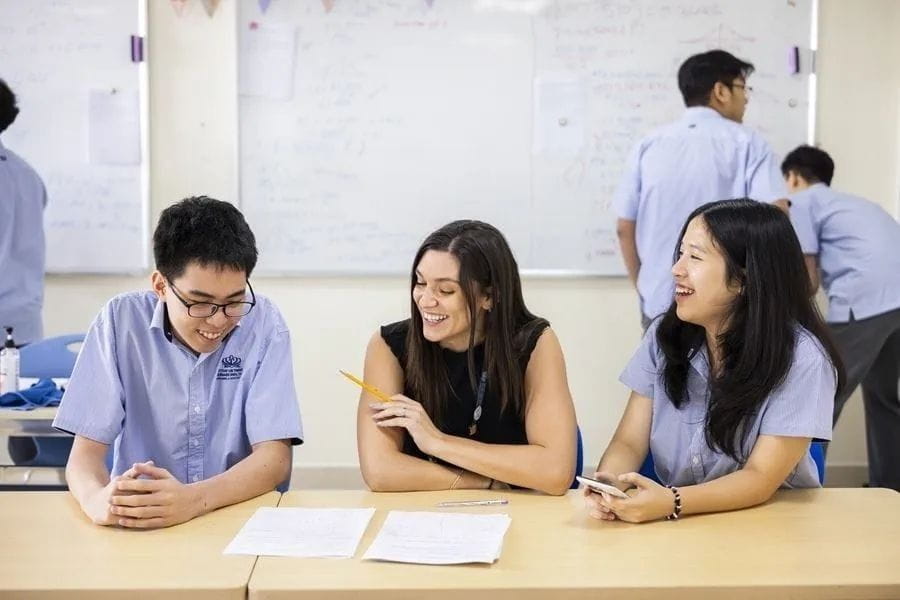
A BVIS Ho Chi Minh City teacher guides students to explore new ideas, ask questions and actively seek solutions through interactive learning (Source: BVIS Ho Chi Minh City)
>> Read more: Top 6 International School Curriculum and How to Choose the Right One for Your Child
Developing Critical Thinking Through Student Clubs
At BVIS Ho Chi Minh City, critical thinking extends beyond the classroom through a wide range of student clubs. In Debate Club, students practise constructing arguments, responding to contrasting viewpoints and presenting their ideas with confidence, strengthening both communication and critical thinking. The Philosophy, Society and Ethics Club also gives students opportunities to explore theories, social issues and philosophical questions through in-depth discussion.
Regularly analysing, evaluating and debating different perspectives helps students develop critical thinking, forming independent thinking and judgements based on sound reasoning and persuasive evidence. This reflects the BVIS educational approach: students learn not only subject knowledge, but also how to think, question and defend their views with confidence.

BVIS Ho Chi Minh City students take part in a TEDx speaking event, confidently expressing themselves and presenting their viewpoints to an audience (Source: BVIS Ho Chi Minh City)
Critical Thinking Reflected in Strong Academic Outcomes
At BVIS Ho Chi Minh City, critical thinking is developed throughout the curriculum and provides an important foundation for success in international academic programmes. In Secondary, the IGCSE and A Level pathways create opportunities for students to analyse information, assess evidence, construct arguments and apply knowledge to academic problems. These skills support deeper understanding, help students respond to complex questions and encourage greater independence in learning.
Developing these capabilities also contributes to strong performance in international examinations. In the 2025-2026 academic year, 57% of all IGCSE grades achieved A*-A, 75% achieved A*-B and 92% achieved A*-C. At A Level, 44.4% of all grades achieved A*-A. These results reflect both students’ academic achievement and the value of equipping them with the subject knowledge and thinking skills required for increasingly advanced study.
>> Parents may also be interested in:
- Is an International School Right for Your Child? Key reason to choose
- How to Choose an International School: 8 Essential tips for Parents
Critical thinking provides a foundation for independent thought, effective analysis and problem-solving in both learning and everyday life. With an educational approach centred on all-round development, BVIS Ho Chi Minh City enables students to explore knowledge actively, express their perspectives with confidence and prepare to adapt to the future. Parents are invited to learn more about the BVIS curriculum through the options below.
- Campus address: 44–46 Street No. 1, Binh Hung Residential Area, Binh Chanh District, Ho Chi Minh City.
- Opening hours: Monday - Friday (8:00 AM – 5:00 PM)
- Hotline:
- Primary: +84 (28) 3758 0709 ext. 111
- Secondary: +84 (28) 3758 0717 ext. 211
- Email: admissions@bvisvietnam.com
Related news
News image ![What is Critical Thinking? 7 Effective Ways to Develop Critical Thinking Skills in Children - tu duy phan bien]() Blog | Educational Insights
Blog | Educational Insights What Is Critical Thinking? 7 Effective Ways to Develop Critical Thinking Skills in Children
Critical thinking is the ability to analyse and evaluate information objectively and logically rather than accepting it passively or relying on instinct. Discover effective ways to develop this skill in children.
News image ![What is STEAM Education? Difference between STEAM and STEM Education - steam la gi]() Blog | Educational Insights
 Blog | Educational Insights
What Is STEAM Education? Benefits of Applying the STEAM Approach to Learning
Discover the STEAM education approach, integrating five disciplines: Science, Technology, Engineering, Arts and Mathematics to support children’s holistic development.
News image ![What are communication skills? How to improve children’s communication skills effectively - ky nang giao tiep]() Blog | Educational Insights
 Blog | Educational Insights
What are communication skills? 7 Effective Ways to Improve Children's Communication Skills
Communication skills are the ability to interact with others and convey information and emotions clearly and effectively to build connections. Discover effective ways to develop children’s communication skills with confidence.
News image ![Soft skills: 8 Essential soft skills and their importance for students - ky nang mem]() Blog | Educational Insights
 Blog | Educational Insights
Soft Skills: 8 Essential Soft Skills and Their Importance for Students
Discover 8 essential soft skills that help students communicate confidently, collaborate effectively, solve problems and adapt to a changing world. Learn why these skills are vital for future success.


