


What Is an International School? Understanding the Different Types of Schools

- What Is an International School?
- How Do International Schools Operate?
- International Schools, Bilingual Schools, Integrated Schools and Enhanced English Programmes: What's the Difference?
- Common Misconceptions About International Schools
- What Options Are Available After Graduating from an International Programme?
- The Educational Model at BVIS Ho Chi Minh City
- Frequently Asked Questions About International Schools
What Is an International School?
An international school is an educational institution that delivers an internationally recognised curriculum, such as the British curriculum, International Baccalaureate (IB) or American curriculum, rather than following the national curriculum of the host country exclusively. International schools typically provide a globally focused learning environment, with English or another international language used as the primary language of instruction across many subjects.
Depending on its educational philosophy, a school may offer one international curriculum or combine several internationally recognised programmes across different phases of education, from Early Years through to Secondary.
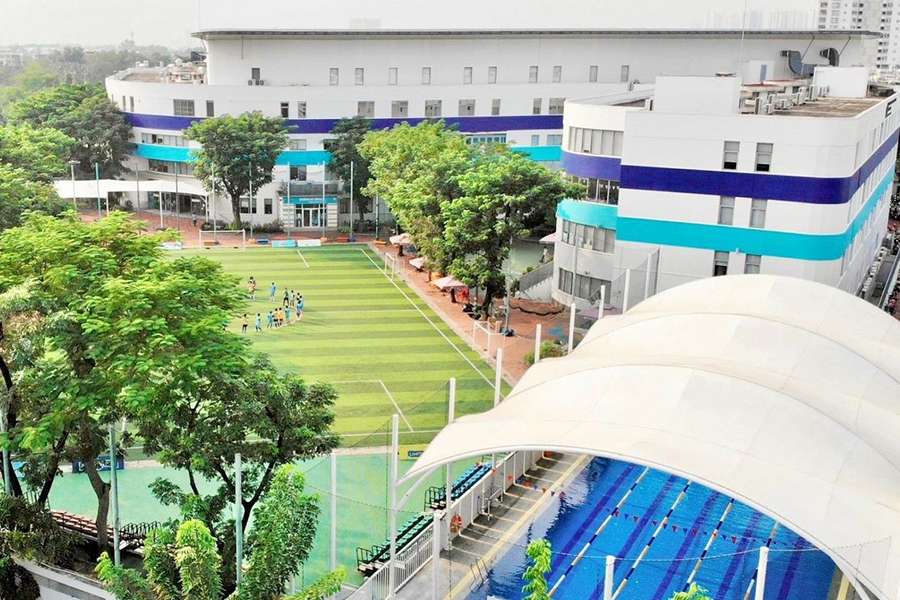
A modern international learning environment combines internationally recognised curricula, innovative teaching approaches and purpose-built facilities to support student development (Source: BVIS Ho Chi Minh City)
>> Read more: Is an International School Right for Your Child? Key reason to choose
How Do International Schools Operate?
To better understand the characteristics of international schools, it is useful to explore how they deliver their curriculum, organise learning and create educational environments that support students' development.
International Curricula
International schools may offer a variety of educational programmes. The most common include the British curriculum, the American curriculum and the International Baccalaureate (IB). Although schools may all be described as "international", these curricula differ significantly in terms of subject structure, assessment methods and university preparation pathways. For this reason, parents should look beyond the label of "international school" and understand the specific curriculum their child will follow.
>> Discover: Top 6 International School Curriculum and How to Choose the Right One for Your Child
Language of Instruction
One of the defining features of an international school is that English is often used as the primary language of learning across most subjects. This differs significantly from studying English as a separate subject. In an international school environment, students use English to access knowledge, conduct research, deliver presentations, collaborate with peers and solve problems across a wide range of academic disciplines.
Learning Environment
International schools often bring together students and teachers from diverse cultures, languages and backgrounds. Learning within a multicultural community provides students with opportunities to engage with different perspectives, develop cultural awareness and strengthen their communication skills in an international setting. Over time, students cultivate open-mindedness, respect for different viewpoints and the adaptability needed to succeed in a global environment.
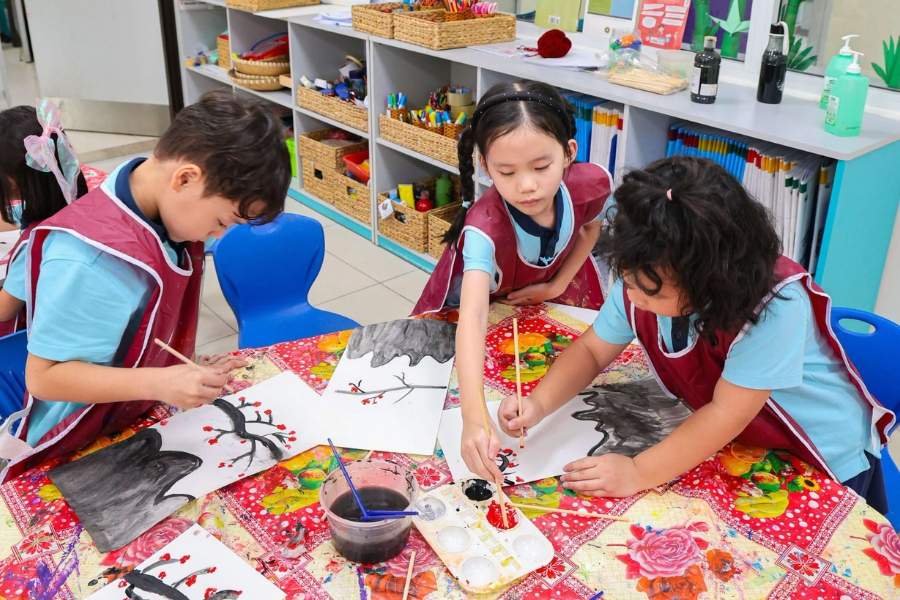
Primary students explore Chinese culture, helping them develop global awareness and respect for different cultures and traditions (Source: BVIS Ho Chi Minh City)
Student Assessment and Qualifications
Rather than relying solely on periodic tests and examinations, many international curricula combine ongoing assessment with internationally recognised examinations. Depending on the curriculum, students may work towards qualifications such as: IGCSE, A Level, IB Diploma Programme, US High School Diploma. These qualifications are recognised by universities around the world and can support applications to higher education institutions internationally.
>> Explore:
- Top 8 International Schools in District 7 in 2026 – Quick comparison
- Top 10 Best International Schools in Ho Chi Minh City 2026
International Schools, Bilingual Schools, Integrated Schools and Enhanced English Programmes: What's the Difference?
Parents in Vietnam can choose from several educational models, including international schools, bilingual schools, integrated schools and enhanced English programmes. While each option emphasises language development and modern learning experiences, they differ significantly in terms of curriculum, language of instruction, qualifications and educational pathways. Understanding these differences can help families make informed decisions based on their child's needs, aspirations and future educational goals.
| Criteria | International School | Bilingual School | Integrated School | Enhanced English Programme |
| Main Curriculum | International curriculum (British, American, IB) | Vietnamese Ministry Of Education and Training (MOET) Curriculum with international elements | Vietnamese MOET Curriculum with approved international components | Vietnamese MOET Curriculum |
| Language of Instruction | Primarily English | Vietnamese and English (varies by school) | Primarily Vietnamese with selected subjects taught in English | Primarily Vietnamese |
| Assessment | International assessment systems | Combination of Vietnamese and international assessment | Vietnamese assessment with international benchmarks in selected subjects | Vietnamese assessment |
| Qualifications | IGCSE, A Level, IB Diploma, US High School Diploma | Vietnamese qualifications and/or international certifications | Vietnamese qualifications, sometimes supplemented by international certifications | Vietnamese qualifications, often with English-language certificates |
| Post-Graduation Pathways | Broad range of domestic and international options | Domestic and international pathways depending on qualifications | Primarily domestic with some international opportunities | Primarily domestic |
| Key considerations | Accreditation, qualifications awarded and teaching quality | How the two curricula are integrated and which language is used in each subject | Approval and structure of the integrated curriculum | Actual English learning hours and teacher qualifications |
Note: Educational models vary between schools. Parents should always verify curriculum details, language of instruction and qualifications directly with the school.
Common Misconceptions About International Schools
The post-graduation pathways for students at international schools is not only studying abroad
Many parents assume that international schools are primarily designed to prepare students for studying overseas. In reality, this is just one of many pathways available after graduation.
With internationally recognised qualifications such as IGCSE, A Level or the IB Diploma Programme, students may apply to universities in Vietnam, international universities within Vietnam or higher education institutions around the world. The key advantage is not that students are directed towards a single destination, but that they have access to a wider range of future opportunities.
More English lessons do not automatically mean an international curriculum
A school may offer a significant number of English-language lessons or teach selected subjects in English while still following the Vietnamese Ministry of Education and Training national curriculum.
When considering a school, parents should look beyond the number of English lessons and consider the core curriculum, the language of instruction across key subjects and the qualifications students receive upon graduation.
>> Discover more: What is the SAT? Key things you need to know about the SAT exam
Not all international schools are the same
While many schools may offer internationally recognised curricula, the quality of the learning experience can vary significantly from one school to another. In addition to the curriculum itself, parents should consider factors such as the quality of teaching, school leadership, student support systems and how the school monitors and supports student progress. The curriculum provides the foundation, but it is the people and the way the programme is delivered that truly shape a student's educational experience.

A teacher provides direct support during a swimming lesson, demonstrating the important role educators play in helping students develop new skills and build confidence (Source: BVIS Ho Chi Minh City)
International qualifications are only part of the value
International qualifications are recognised by many universities worldwide, but they represent only one aspect of an international education. Throughout their educational journey, students also develop critical thinking, communication, collaboration, problem-solving and independent learning skills. These capabilities are equally important in preparing students for university and future success.
>> Explore more:
- What Are Life Skills? The Role of Life Skills Education in Child Development
- Soft skills: 8 Essential soft skills and their importance for students
- Top 5 Essential Life Skills for Children to Build Confidence and Independence
What Options Are Available After Graduating from an International Programme?
Depending on the curriculum and qualifications they complete, students can pursue a variety of post-graduation pathways. They may choose to attend universities in Vietnam, international universities within Vietnam or higher education institutions around the world. Some students may also pursue foundation programmes, specialist pathways in art and design, or other educational and career routes that align with their interests, strengths and aspirations.
What matters most is not that an international education leads to a single destination, but that it expands the range of opportunities available to students in the future.
>> Learn more about studying abroad:
- Requirements for study abroad in the USA: what do students need to prepare to get into their dream university?
- Du học Úc: Điều kiện và lộ trình học tập hướng đến đại học Úc
The Educational Model at BVIS Ho Chi Minh City
Among international schools in Vietnam, BVIS Ho Chi Minh City offers a distinctive educational model. Rather than delivering two separate curricula in parallel, students follow a single British curriculum pathway taught through both English and Vietnamese.
This means students do not have to continuously switch between different programmes, approaches to learning or assessment systems. Instead, they engage with the same curriculum content, learning objectives and educational philosophy in both languages, creating a more consistent and cohesive learning experience.
The language journey at BVIS is carefully designed to match students' developmental stages. In the Early Years, English and Vietnamese are delivered in approximately equal proportions (50:50), helping children establish strong foundations in both languages. English exposure increases to around 60% in Primary, 80% in Years 7-9, and approximately 93% when students progress to IGCSE and A Level.
This approach enables students to develop strong proficiency in both English and Vietnamese during their early years before transitioning to a predominantly English-medium academic environment in Secondary. As a result, students are able to access internationally recognised qualifications with confidence while maintaining their Vietnamese language skills, cultural understanding and sense of identity.
For many Vietnamese families, this balance is particularly important. Students are prepared to thrive in international academic and professional environments while remaining connected to the language, culture and values that form an important part of who they are. This educational philosophy underpins the BVIS learning journey from Early Years through to IGCSE and A Level.

BVIS provides opportunities for students to discover their strengths, develop their abilities and fulfil their potential within an international learning environment (Source: BVIS HCMC)
At BVIS Ho Chi Minh City, learning is tailored to each student's strengths and individual needs while maintaining a strong focus on academic English.
Students are encouraged to explore their interests, develop their talents and challenge themselves across a wide range of areas, including academics, the arts, sport and leadership opportunities. Through these experiences, they gradually build confidence, independence and a strong sense of purpose.
Beyond the classroom, students also benefit from global learning opportunities through Nord Anglia Education and collaborations with world-renowned organisations, including the Massachusetts Institute of Technology (MIT), The Juilliard School, UNICEF and IMG Academy.
>> Read more:- What Is Personalised Learning? Benefits of a Personalised Approach to Education
- AI in education: Practical applications of AI in teaching and learning
Frequently Asked Questions About International Schools
What are the benefits of attending an international school?
An international education helps students develop language proficiency, independent thinking and problem-solving skills within a multicultural learning environment. Opportunities in the arts, sport and extracurricular activities also enable students to explore their interests, develop their strengths and prepare for a wide range of future educational pathways.
>> Discover more: 7 benefits of studying at an international school
Are international schools public or private?
International schools and private schools are both part of the non-state education sector. However, they often differ significantly in terms of curriculum, language of instruction, student outcomes and tuition fees.
Should I choose an international school or a bilingual school for my child?
The answer depends on the curriculum and level of English-language immersion that best suits your child's needs and your family's aspirations. International schools typically deliver an international curriculum, while bilingual schools usually combine elements of both Vietnamese and international programmes.
Can students transfer from an international school to a public school?
Yes. Students from international schools can transfer to other education systems, including public schools following the Vietnamese Ministry of Education and Training curriculum. However, transfer requirements depend on factors such as the student's age, previous curriculum, the receiving school's requirements and the relevant regulations in place at the time.
Can students from international schools sit in the Vietnamese National Examinations to University?
Yes. Students from international schools may apply to universities in Vietnam and abroad, provided they meet the admission requirements and qualification criteria of each institution. International qualifications such as A Level and the IB Diploma Programme are widely recognised and accepted by universities around the world.
>> Read more: IB vs A-Levels: What's the difference? Which is better for your child?
How Should Parents Choose an International School?
Parents should consider factors such as the curriculum, teaching quality, international accreditation, academic outcomes, post-graduation pathways and tuition fees. Most importantly, the school's educational approach and learning environment should align with their child's strengths, interests and future aspirations.
>> Read more: How to Choose an International School: 8 Essential tips for Parents
Understanding what an international school is is only the first step. Choosing the right school requires careful consideration of the curriculum, educational philosophy, learning environment and long-term opportunities available to students. If you would like to learn more about the British curriculum pathway at BVIS Ho Chi Minh City, please contact our Admissions Team:
- Campus address: 44–46 Street No. 1, Binh Hung Residential Area, Binh Chanh District, Ho Chi Minh City.
- Opening hours: Monday - Friday (8:00 AM – 5:00 PM)
- Hotline:
- Primary: +84 (28) 3758 0709 ext. 111
- Secondary: +84 (28) 3758 0717 ext. 211
- Email: admissions@bvisvietnam.com
Discover more about BVIS:
Related news
Blog | Educational Insights  Blog | Educational Insights
 News | Educational Insights
 Blog | Educational Insights


